 Continue with Steam
Carry the  Soul Urn when your team can spare a runner, protect a plausible route and manage the lanes during the trip. Escort when your presence helps the carrier reach the marked destination; contest when you can intercept without giving up a more important defense. The Urn is an opportunity for
 souls and
 permanent buffs, not an automatic reason for everyone to leave their lane.
How the Soul Urn works
The Soul Urn is a separate objective from the  Unstable Rift. Valve separated the two in its June 30, 2026 update: the Urn appears on one side of the map and is carried to a drop-off on the opposite side. Use the current objective marker and delivery cue to identify the destination; do not assume an old guide’s route still applies.
Once it has landed, pick it up with a light or heavy  melee attack, then carry it to the indicated drop-off. The current community Urn reference describes the melee pickup; Mobalytics describes the destination markers. Valve’s June update says the Urn deposits immediately at the drop-off. It does not directly
 damage the
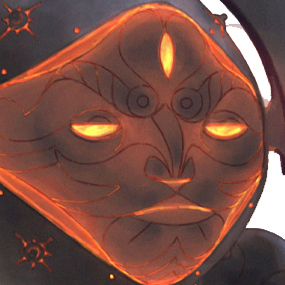 Patron.
The runner is not automatically disarmed or silenced and is no longer automatically revealed as the carrier. The Urn can still be heard nearby; Valve’s July 9 update increased the distance of its voice. The runner cannot parry and cannot manually drop it. A light or heavy melee hit, a stun or  death forces a drop; the dropped Urn stays where it fell. Some travel actions, including
 the Doorman’s
 doorway and
 Mirage’s teleport, also cause a drop. Valve: June 30 update
What delivery pays
On deposit, the bounty is released as soul orbs. If not denied, the souls go to the runner; an ally who secures an orb shares that orb’s value with the runner. The runner also receives four permanent buffs. The June update describes the reward and sharing, while the community Urn reference explains that enemy players can deny the orbs. Do not assume the old automatic team-wide payout or an ability point for the carrier.
Is delivery enough if enemies are near the orbs? Delivery releases the bounty, but enemies can deny the orbs. Secure what you safely can and protect the runner; do not turn a completed delivery into an unfavorable chase for every orb.
After delivery, secure the orbs if it is safe, while watching the approach for opponents. A successful run is not a guaranteed full payout if enemies contest the orbs, and it does not replace defending an exposed structure.
Decide before picking it up
- Check both ends. Identify the pickup, marked destination and a route with cover and a way to retreat. A short route through enemies may be worse than a slightly longer route your team can support.
- Look at the lanes. Is a wave threatening a structure, and who can handle it? Clear or stabilize it when safe, or agree on coverage before sending players away.
- Locate threats and help. Note visible opponents and treat missing opponents as uncertain, not as proof that the route is clear. Decide who can accompany the runner and who must remain available elsewhere.
- Compare the alternative. If your team can protect an important defense or make an immediate push instead, consider what sending a runner and escorts would cost. A delivery creates an economic benefit; a structure or fight can be more urgent.
- Commit only to a feasible run. The Urn’s value starts to
 decay after a delay from pickup and eventually expires, so an extended hold is not a free way to wait indefinitely. If the route becomes untenable, the carrier cannot simply choose a manual drop: move toward help or cover and respond to the actual threat. Valve: June 30 update
The laning guide covers keeping a lane stable; the objectives guide explains how  structures fit into the wider match.
Choose the next job
| Situation | First action | What to check |
|---|---|---|
| A route is open and the lane is covered | Carry or escort | Who can protect the runner and secure the delivery area? |
| A wave threatens your structure | Defend or arrange coverage | Can you leave without losing the defense? |
| The enemy carrier is approaching | Intercept if you can arrive safely | Do you have a reliable way to force a drop and allies to contest it? |
| You are too late or split | Trade or defend elsewhere | Is the alternative actually available, and who covers the lane? |
Before pickup: Point to the destination, name a runner, check who covers the threatened wave, and identify where an escort can help. If you cannot name a safe next action after an interception, resolve that risk before committing players.
Carry and escort as a team
When your team can support the route
Illustrative scenario: your nearby wave is under control, a teammate can watch the lane, and an ally is positioned to help along the intended route. Pick up the landed Urn and follow the destination cue. Before committing to a crossing, check whether an opponent has appeared and whether your escort can still reach you. Do not rely on an exact turn or a supposed safe passage from a different map version.
The escort’s job is to keep a path open, not chase an opponent away from the runner. Stay close enough to respond to an attempted melee hit or stun, while using available cover and avoiding a formation that lets one attack catch everyone. If the carrier drops the Urn, check who controls the area and whether the lane is still covered before attempting another pickup. The Urn remains at the drop location rather than automatically returning to its spawn under the June rules.
When the lane needs you
Illustrative scenario: an enemy wave is approaching your structure and the available teammate cannot safely hold it alone. Sending both of you to escort could leave the lane undefended. Handle the defense or coordinate another ally before deciding whether a run remains feasible. If no safe route or coverage develops, let the Urn go and take the available lane or objective action instead.
An escort has a cost even when the carrier survives: the escort is not simultaneously clearing a distant wave or defending another structure. There is no fixed number of escorts that makes every run safe.
Contest the enemy carrier—or trade elsewhere
When an intercept is realistic
If you can arrive ahead of the carrier with an ally, use cover and reserve a reliable stun or a safe melee opportunity to force a drop. A forced drop is a chance to contest, not an automatic capture: enemy escorts can still fight, and you must control the space before attempting a pickup. Avoid chasing through an exposed route after the carrier has passed if it separates you from help.
Delivery is immediate, so defending only the last step is risky. Move to a position you can hold before the runner reaches the marker, or decide early that you cannot get there safely. If your team is split and the enemy has control of the route, clear a threatened wave, defend a structure or pursue a realistic objective elsewhere rather than losing players in a late chase. Those alternatives are situational; they are not guaranteed to be worth more than every Urn.
Review the decision afterward
Ask whether your team had lane coverage, whether the runner had a usable route and whether the orb payout was secured. If the run failed, identify the first problem: an unseen enemy, an escort too far away, a forced drop near opponents, or a lane left undefended. Use that first failure to change the next attempt.